|
Jan 22 2012
Happy Lunar New Year

|
|
|
Jan 16 2012
Chicken soup for the body
If I am tired after a bike ride or a hike, no matter how hot and sweaty I am, it is always soup, usually with noodles, that I crave. The hot liquid and soft ingredients just seem to hydrate, soothe, and restore the old body quickly. Nothing else will do the job. Lucky I live in Taiwan where there is a noodle soup shop on virtually every road.
There are no shortage of contrasts between Western and Chinese food, but there are similarities too. One of these is the use of soup as a convalescent food [Soup: Why do we eat it when we're ill? –BBC]. When it comes to the conviction that chicken soup is a great panacea, the parallel is especially close.
The chicken may have been domesticated in what is now south China as early as 4,000 BC.[1] Chinese believe that poultry, especially chicken is the most nutritious of all meat. Chicken is a warming food, good for the immune system, a great tonic for the whole body. It has different health effects depending on what other foods and herbs are combined with it. For example, chicken soup concoctions are an essential part of the diet for any pregnant or nursing woman. Chicken stock is an ingredient of many Chinese dishes.
This parallel has been fortuitous for Brands Essence of Chicken in its Asian marketing; a Western product that dovetails perfectly into traditional Chinese beliefs (Brand's now have other products that utilise Chinese foodstuffs and herbs).
Here are some Chinese soup recipes:
Ginseng Chicken Soup 人參雞湯 Ginseng has been treasured by Chinese as a tonic for thousands of years. This dish is a tasty example of Chinese medicinal cooking.
Pineapple and Bamboo Chicken Soup 鳳梨筍子湯 A home-style Taiwan soup.
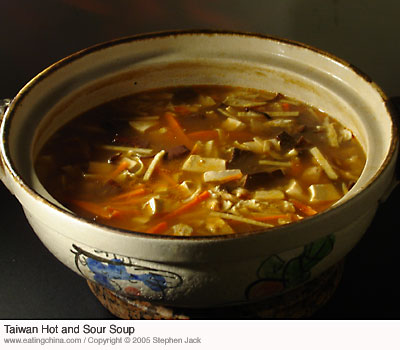
Hot and Sour Soup 酸辣湯 This is a hearty, chunky Taiwanese version of the soup that can be found in Chinese restaurants worldwide.
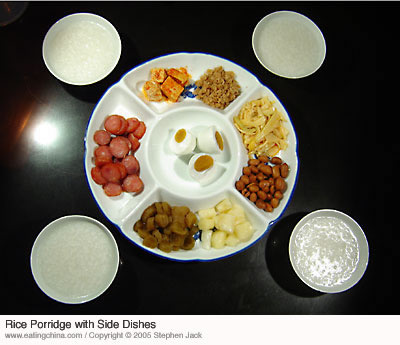
Bamboo and Pork Soup 筍子排骨湯 A simple, traditional Taiwanese Soup.
[1] China Food Update
|
|
|
Jan 14 2012
Chinese tree offers hope for alcohol antidote
[News story] Researchers at the University of California say an ancient Chinese remedy contains a compound which can prevent alcohol from having intoxicating effects on the brain. It can protect the liver and help prevent alcohol addiction. The compound is made from the oriental raisin tree (Hovenia dulcis) 北枳椇 běi zhǐ jǔ.
The researchers experimented on rats, noting that, "As well as sobering them up, the treated rats also exhibited fewer hangover symptoms; for example, untreated rats were more likely to cower in the dark recesses of their maze," behaviour that any human drinker would identify with.
We see this kind of possible silver bullet in development type headlines almost on a weekly basis, and in most cases that is all you ever get. Now, if the headline read, "Alcohol antidote a reality; on market tomorrow," that would really be something.
|
|
|
Jan 11 2012
New Chinese cookbook has Cultural Revolution theme

Even if you have only a passing acquaintance with modern Chinese history you will be aware that the Cultural Revolution did not produce much cheer. Mao's second 'Great' misadventure (following the Great Leap Forward), was prolonged, and odious, adversely effecting the majority of the population including many of the top brass. One component was the Down to the Countryside Movement, where schools were closed and students were sent to the countryside for 'reeducation.' Sasha Gong was one of 17 million young city dwellers uprooted and transplanted to far flung districts, forced to eke a living alongside farming folk. Though the whole arrangement was resented nearly as much by the peasants as the students, in retrospect Gong seems agree with Disraeli who said, "There is no education like adversity."
In the newly released Cultural Revolution Cookbook, she writes, "From 1969–1971, I learned to work in the rice fields and to plant vegetables. My team was also charged with building a school and cooking for hundreds of people in a communal kitchen." In other words, a back-to-basics rural education. According to American co-author Scott D. Seligman, "… one of the things that they actually did learn from the peasants was how to make do with what there was. They learned to cook with fresh, wholesome foods that were in season, to conserve scarce fuel and to prepare remarkably tasty and healthful dishes with enough nourishment to get them through long, arduous days in the fields."
The book offers recipes aplenty including, dredged fish with ginger and scallions, shallow-fried potato threads, and spicy white radish salad, plus personal anecdotes, facts, and reproductions of socialist realist propaganda posters that – viewed from a healthy distance of geography and time – are positively charming.
The Cultural Revolution Cookbook, Simple, healthy recipes from China's countryside
by Sasha Gong and Scott D. Seligman
Post
a Comment |
|
| |
|
 |
|
|
|
|
| |
|
| |
 |
|
|
| |
|
The True Origin of Kiwifruit
Although its name strongly suggests a New Zealand origin, the kiwifruit is in fact, native to China's Yangtze Valley. Until midway through the 20th century, the fruit was known as Chinese gooseberry. Once a commercial industry was developed in New Zealand, fruit growers apparently decided that the furry egg-shaped fruit bore a symbolic resemblance to their native flightless bird, the kiwi … read more
More
Chinese Food Facts
Chinese Cooking Tips |
| |
|
| |
|
|