Chinese Food Facts and Myths
Chinese Food Facts. 29 surprising things about Chinese food, a cuisine that is familiar yet greatly misunderstood. Here we separate reality from myth, truth from misconception.
General
Chinese Food, the World’s Most Popular
Food-related Chinese Inventions
Why Christian Missionaries were known as Eaters of Vegetables.
Rooted on Two Continents: Ginseng Facts
Why Pork is a Synonym for Meat
Is Chop Suey Chinese or American?
From Famine to Feast: Overweight Chinese
Rice
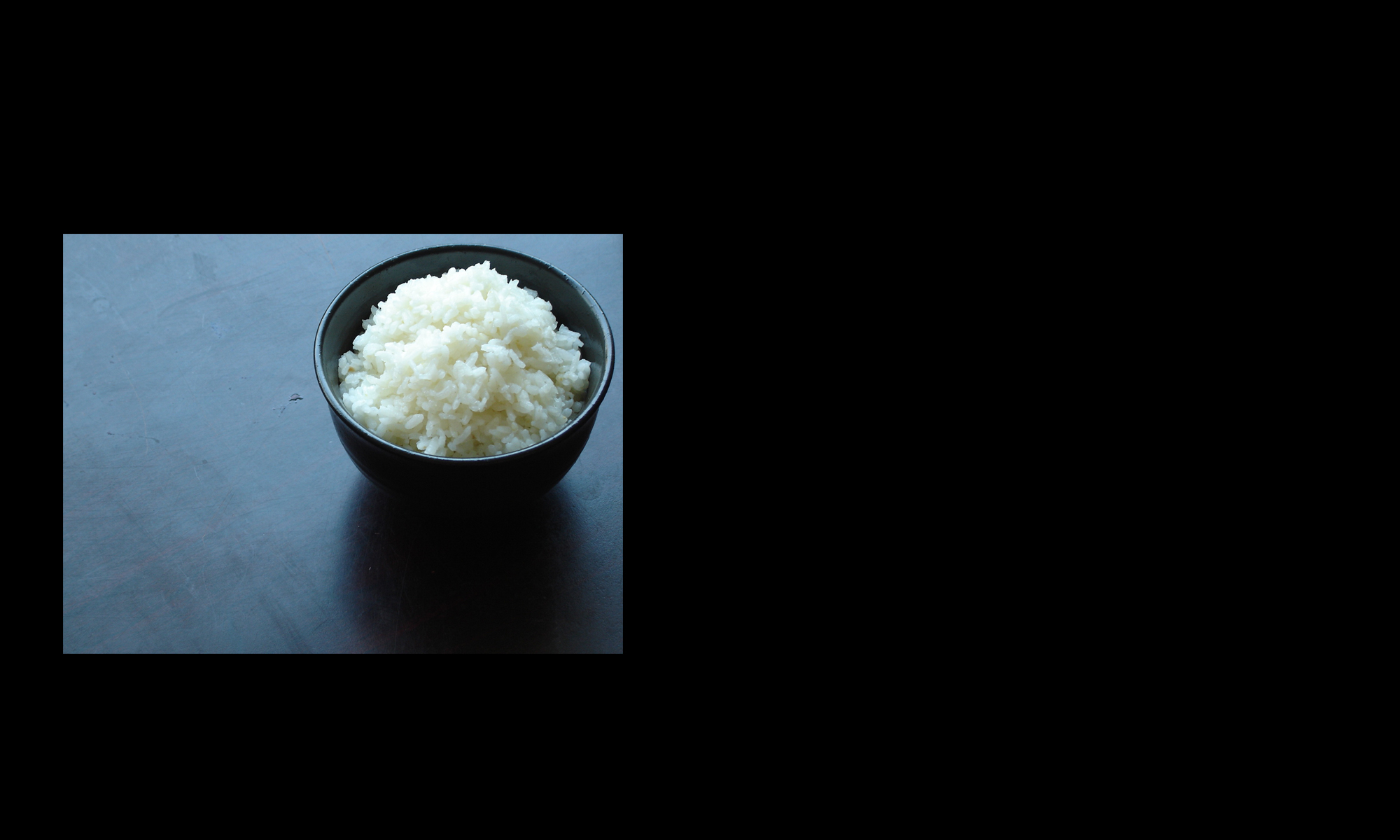
Are Chinese Really Rice Eaters?
Chinese Always Eat Long Grain Rice: True or False?
Rice, the World’s Plainest Food?
China Rice Production and Exports
Chinese Tea
When did Tea Arrive in Europe from China?
Who First Brought Tea to Europe?
Tea, China’s Greatest Food Export
Soy Products
Soybean, the World’s Largest Source of Cooking Oil
Soybeans: Why We Don’t Eat Them Like Other Beans
Utensils
Chopsticks: How Chinese Use Them
The Wok, More Than Just a Stir Fryer
Chinese Food, the World’s Most Popular Cuisine
By virtue of being the choice of 1.3 billion people, Chinese cuisine is certainly the world’s most popular cuisine. But the popularity of Chinese food extends way beyond China’s frontiers. Twenty-three million Taiwanese also sustain themselves on Chinese food. The 35 million ethnic Chinese settled in far flung locales around the globe have ensured that Chinese food often reigns supreme in the ethnic food markets of many other countries too. There are over 40,000 Chinese eateries in the United States alone. That’s more shopfronts than McDonald’s have worldwide. What town in the US (and many other countries) large enough to support a few eateries doesn’t have at least one Chinese take-away?
Food-related Chinese Inventions
| PERIOD | INVENTION |
| 2000 BC | Noodles (made from millet) |
| 1500 BC | Fish Farming (carp in ponds) |
|
1100 BC
|
Strong Ale (e.g. rice wine) |
|
600 BC
|
The Iron Plough, Roe Cultivation & Intensive Hoeing |
|
400 BC
|
Cast Iron |
|
200 BC
|
The Rotary Winnowing Fan, The Modern Seed Drill, Steel Production from Cast Iron |
|
300 AD
|
The Fishing Reel, Porcelain, Biological Pest Control, Deficiency Diseases |
|
700 AD
|
Brandy and Whisky |
Source The Genius of China
Food in China
Why Christian Missionaries were Known as Eaters of Vegetables.
Buddhist missionaries from India first arrived in China 2,000 years ago. So strong was the tradition of Buddhist missionising in China that by the time their Christian colleagues arrived 1,500 years later, locals referred to the newcomers as eaters of vegetables, because they assumed that all missionaries must be vegetarians.
Source: Food in China
Soup, Always Soup
Chinese rarely sit down to a lunch or dinner that does not include soup (in the case of noodle soup, soup is the meal). Unlike the Western custom of having soup before the main course, Chinese prefer to eat soup during or towards the end of a meal. At a casual meal people tend to pick up the bowl and drink directly from it; in a more formal setting, spoons are required. At a banquet several soup dishes may be consumed, always with the traditional flat-bottomed ceramic spoon.
Rooted on Two Continents: Ginseng Facts
Ginseng has been growing in North America for 70 million years.
North Americans have been selling ginseng to the Chinese for 300 years (it was the United States’ first major export to China in 1800).
Westerners use ginseng mainly as a stimulant or to relieve fatigue, while Chinese use it as an all-purpose tonic.
According to traditional Chinese medicine, the nature of Chinese ginseng is ‘hot,’ while American is ‘cool.’
It takes cultivated ginseng six to eight years to reach the size desired by Asian markets.
Source: Ginseng, the Divine Root
Chinese Ginseng Chicken Soup Recipe
Why Pork is a Synonym for Meat
China consumes far more pork than any other country, and unsurprisingly has the largest pig population in the world (700 million head, says one source). While the sales growth of other types of meat is now faster, pork still accounts for 70 percent of all meat eaten. Pork so dominates the meat market that if a dish name includes the word meat, you can be fairly certain that pork is what is meant. The famous Hangzhou dish dongpo pork, for instance, is known as dongpo meat (東坡肉 dongpo rou) in Chinese. Pork is a standard ingredient in fried rice. Pork fried rice is written simply as fried rice in Chinese, since pork is assumed to be in the dish. If fried rice contains less run-of-the-mill meats, those will be specified – chicken fried rice or beef fried rice, for example. Alongside these dishes, standard fried rice might be called meat fried rice (rou si chao fan), just to distinguish it more clearly from the other fried rice dishes on the menu. But no Chinese would mistake rou or ‘meat’ for anything other than pork.
What is Cassia?
The dried bark of the cassia tree (Cinnamomum cassia) is one of the ingredients of five spice powder. Cassia is related to and similar to the better known cinnamon, a native of Sri Lanka. An alternative name for cassia, Bastard Cinnamon provides a clue that, outside of China at least, it is considered inferior to cinnamon, the flavour being more pungent, not as sweet and delicate, and slightly bitter. What is sold as cinnamon is often actually cassia. Cassia bark is also used in traditional Chinese medicine.
Is Chop Suey Chinese or American?
Chop suey. Sounds Chinese, looks Chinese. There was no reason to question its Chinese credentials, until word slowly started to spread that chop suey is not really Chinese at all, but a dish invented in America for American tastes. Chop suey was first concocted in a San Francisco restaurant in the late 19th century. The story goes that, having sold out of food, the restaurant was in the process of closing for the evening, when a group of unsavoury characters arrived, demanding a meal. The cook felt compelled to improvise from leftover kitchen scraps. These bits and pieces were combined in a wok, and what emerged a few minutes later was chop suey, soon to become America’s favourite (but unauthentic) Chinese dish. There are variations on this tale, but according to anthropologist E. N. Anderson none of them are true. The real origin of chop suey, Anderson says, lies far to the west of the Golden Gate Bridge, in Taishan (Toishan), a county (now a city) of the Pearl River Delta in southern Guangdong, China. Taishan was home to 60 percent of Chinese migrants to America in the second half of the 19th century – surrounding counties supplied most of the other 40 percent. For a hundred years the food served by these folks in America and other countries, completely defined western perceptions of Chinese cuisine. Taishan is known for dishes that combine many different kinds of vegetables – your basic mixed stir fry, something uncommon in other parts of China. So is chop suey a real Chinese dish? Yes. Is it Americanised? No doubt.
Sources: The Food of China
The Encyclopedia of the Chinese Overseas
The True Origin of Kiwifruit
Although its name strongly suggests a New Zealand origin, the kiwifruit is in fact, native to China’s Yangtze Valley. Until midway through the 20th century, the fruit was known as Chinese gooseberry. Once a commercial industry was developed in New Zealand, fruit growers apparently decided that the furry egg-shaped fruit bore a symbolic resemblance to their native flightless bird, the kiwi. Here was a fruit to call their own; and flog to the rest of the world, and so the Chinese gooseberry was reborn as the kiwifruit.
If there is an irony in this story, this is it: China now imports quite a lot of kiwifruit from New Zealand.
From Famine to Feast: Overweight Chinese
Over *70 million Chinese are classed by the health ministry as overweight, while 20 percent of urban children are now considered overweight or obese. For China’s white collar families, lifestyle and diet changes over the last two decades have been immense. There is even a health club boom in prosperous big cities. But at US600 or $700 for a membership of a trendy fitness club, joining is not an option for the struggling urban worker, nor is it likely to be necessary. Business people find themselves loosening their belts more than others because of the crucial role that entertaining plays in Chinese business culture. But at least they can afford the the fitness club membership.
*Seventy million out of 1.3 billion is not much in percentage terms, but in sheer numbers it is equivalent to the population of the UK and Greece combined.
Source: Time Asia Aug. 5 2002
Are Chinese Really Rice Eaters?
An enormous amount of rice is grown and consumed in China, but to characterise Chinese as rice eaters, or call China a “rice-based” society, as the Asia Rice Foundation does, (an organisation that should know better), is quite misleading. It is true that rice is China’s most important grain crop, but Chinese wheat consumption is nearly as high. On average Chinese eat 250 grams of raw rice a day – that’s about four heaped bowls when cooked. Wheat – made into dumplings, noodles and bread – follows closely at 230 grams. To generalise, it is reasonable to think of southern Chinese as rice eaters, and northern Chinese as wheat eaters, or rather, wheaten product eaters.
Figures are for China & Taiwan (1996), not including Hong Kong. Source: The International Institute for Applied Systems Analysis.
Chinese Always Eat Long Grain Rice: True or False?
There are food writers that would have you believe that long grain rice is absolutely required for the genuine Chinese dining experience. Not so. In China both long and short grain are eaten. China’s ricelands are divided between long grain or indica, with 70 percent of the total acreage, and short grain or japonica, with 30 percent. Indica tends to be grown in the south, while japonica is better suited to the more temperate climate of central China. Increasingly though a high-yield indica/japonica hybrid is widely grown. In Taiwan, a hybrid, developed during Japanese rule in the first half of the Twentieth Century, has long been dominant.
Most Chinese restaurants in other countries are Cantonese, so it is only natural that they would serve the long grain of their homeland, and it is to be expected that many people might assume this is the norm in China.
Rice, the World’s Plainest Food?
Even the English, known for their plain cooking, use salt when boiling potatoes and carrots. Yet the Chinese cook rice in nothing but water. In stark contrast to the way most other foods are prepared in China, rice is a singularly pure, simple, even bland dish; the perfect foil for well seasoned meat and vegetable dishes.
China Rice Production and Exports
China is the world’s leading rice producer (followed by India, Indonesia, Bangladesh, Vietnam, and Thailand). 186.73 million metric tons was harvested in 2004. In 2003 China exported 2.597 million metric tons of rice, making it the 5th largest exporter. China trails Thailand at number one, then India, Vietnam and the United States.
Source: International Rice Research Institute
What is Tea?
Tea is an evergreen tree or shrub native to southern China, Tibet and northern India. Camellia sinensis is what the boffins call it. Three basic varieties are recognised, named for their location: China, Assam, and Cambodia. The Chinese variety prefers high altitudes and can produce its small serrated leaves for a hundred years. Chinese have been steeping these leaves in hot water to make a refreshing drink for at least two thousand years. Cultivated plants are regularly pruned keeping them short for easy leaf picking but the wild tree (which can still be found in Yunnan province) can reach (40ft), while an untended domesticated plant can grow up to (30ft). Tea should not be confused with the tea tree found in Australia – Leptospermum, or herbal and flower teas (tisanes), neither of which are true teas.
Source: All the Tea China
When did Tea Arrive in Europe from China?
About 1610, around the same time that coffee arrived from its native Africa. Tea, however had much earlier reached other lands closer to China’s borders. It came to Japan, for example during the early part of the Tang Dynasty (AD 618–807).
Who First Brought Tea to Europe?
Though traders must have long carried tales of tea and even tea samples from China and Japan to Europe, a Portuguese Jesuit missionary, Jasper de Cruz was the first person to document his experiences of making and drinking the stuff. That was in 1560. But it was the Dutch who introduced the beverage commercially to Europe. The Dutch East India Company at the time was busy trying to dominate the spice trade of what was to later become the Dutch East Indies, present-day Indonesia. Unlike the Portuguese they had never successfully established direct trade relations with China, instead relying on transshipment out of Java. There the Dutch would have regularly come into contact ships from Fujian or Guangdong carrying tea and it was from Java around 1610 that the first tea was shipped to Holland. The tea initially imported into Europe was green tea. It was expensive and marketed largely as a health drink, but by the mid Eighteenth Century tea was cheap and plentiful enough for the populations of Russia and England to be addicted to it. Much later the Dutch grew tea in Indonesia and that country remains a significant producer today.
Tea, China’s Greatest Export
Chinese cuisine has been exported to the world very successfully. Tea is the one, singular item that has eclipsed all individual Chinese foodstuffs and even the cuisine itself in its influence on the wider world. A drink enjoyed in all its various forms by everyone from Japanese Emperors to Russian peasants.
Nearly three million tons of tea are produced worldwide, according to the U.K.-based Tea Institute. Tea drinkers consumed nearly three cups a day in 1999, or a million more cups than the year before, according to the Institute.
Tea like coffee contains caffeine, and no doubt the addictive qualities of that substance play a part in the drink’s popularity.
With the health benefits of tea increasingly understood and touted, tea will continue to win new adherents well into the future.
Tea and Your Health
| Attribute | Tea Type |
| Digestion | All types |
| Anti-bacterial | All kinds (unconfirmed) |
| Cancer Prevention | Green |
| Heart | Oolong, pu’er* for cholesterol; green & oolong for blood vessels |
| Slimming | Oolong & pu’er |
| Dental | Green |
*Also known as pu-erh or puer.
Source All the Tea China
Tea and the English Language
A hundred years after its arrival in England in 1658, tea had changed the way people lived. Today in tea drinking countries, how people dine, work, and enjoy their leisure time is still influenced by an ongoing love affair with tea. This is reflected in language. The call of, “Tea break,” for example, announces a short rest period at work.
Drinking tea required specialist apparatus, some of which was originally imported from China. Later the English made adaptations to suit their own style of tea drinking. Take the teaspoon. It started life as a spoon-for-tea, but also became a standard measurement in cooking. Without it almost every cookbook published in the last 300 years would need to be rewritten. In traditional China though, the teaspoon was unknown as tea drinkers did not add anything to their tea leaves except hot water and therefore had no need to stir.
Some common tea words
tea (dinner), high tea, tea time, morning/afternoon tea, tea break, tea shop, tea towel (dish towel), tea set, tea service, tea caddy, tea cup, tea saucer, tea pot, tea kettle, teaspoon, tea cosy, tea table, tea chest.
Soybean, a Native of China
Native to northern China, soybeans (Glycine max) were cultivated as early as B.C. 3,000. Soybeans later reached other parts of Asia, probably introduced by Buddhist missionaries. The bean’s high nutritional value, after processing, and versatility have made it extremely important in Buddhist vegetarian cooking.
Source: On Food and Cooking
Soybean, the World’s Largest Source of Cooking Oil
Soybeans contain 18% fat, more than any other legume except for peanuts (which are technically a legume). Chickpeas for example, lag way behind with 5%.
Source: The Oxford Companion to Food
Soybeans: Protein Rich
Along with rice and wheat, soybeans are one of the world’s great staples. Of the three, soybeans are the most nourishing. They are very high in protein (37%), much higher than meat (15 – 20%) and any other plant, and the only plant source of complete protein. Furthermore, soy protein is considered very good quality. Many Asians with a low-meat diet rely on soy foods for an adequate protein intake. Soybeans are almost as good as meat in amino acid balance.
Soybeans: Why We Don’t Eat Them Like Other Beans
Even after lengthy boiling, soybeans remain quite tough and a little bitter. More importantly, due to a digestive enzyme called trypsin which interferes with protein digestion, soybeans are largely indigestible even after cooking. Most of the bean’s highly valuable protein just passes through your system. No doubt it is for these reasons that the Chinese learned to process the bean in other ways before cooking and consuming. These processes include pressing oil from the beans, grinding and boiling to make soy milk, grinding, boiling and adding a coagulating agent to make tofu, and fermenting to create products like soy sauce and black beans. Whole fresh beans (ripe beans picked before they are dry and hard) are cooked in their pods and eaten as a vegetable.
Source: On Food and Cooking
Soy and Heath
Soybeans contain:
37% protein (meat protein ranges from 15 – 20%)
34% carbohydrates
18% oil
a range of vitamins and minerals
Some soy products may:
be very good for your heart by reducing cholesterol and inhibiting cholesterol oxidation
reduce the risk of cancer due to a family of chemicals called isoflavones
help prevent and treat osteoporosis
help diabetes sufferers
reduce menopausal symptoms
The Origins of Chopsticks
Chopsticks have been dug from burial plots that are at least 3,200 years old. Some surmise that they evolved from a practice of using a wooden stick while cooking on an open fire to prod, stir or move food. It is fairly easy to imagine how a pair of sticks came to be used like tongs.
Chopsticks: How Chinese Use Them
Chinese often use chopsticks like a spoon. The rice bowl is held up to the mouth and the rice is shovelled in. Not very elegant but it works, letting you eat quickly without spilling food. Same thing goes for noodles, but not for soup!
When it comes to eating fish whole, the way Chinese prefer, nothing beats a nimble pair of chopsticks for prying small bits of flesh away from those annoying fish bones. Chopsticks are equally adept at plucking the fish’s eye from its socket should you choose to indulge (which, according to Chinese medicine is very strengthening for your own.
Chopsticks, especially purpose-built extra-long ones are an important cooking utensil.
Chopsticks, ‘Chinese Tongs’
As they are normally used, chopsticks are essentially a pair of tongs – the hand acts as the hinged connection joining and controlling the two sticks. It is interesting to wonder why chopsticks were not developed into proper tongs, a utensil that would be much easier for the beginner, whether Chinese or foreign, to grapple with.
The Wok, More Than Just a Stir Fryer
People tend to pigeonhole the wok as an instrument of stir frying. It seems to have been developed specifically for that use; that is the job it does to perfection. Yet this uniquely shaped cooking pot handles at least adequately: frying, deep frying, braising, stewing, boiling, smoking, steaming, and soup making, though it is not used as a rice cooker. Woks are always better over flames, whether fuelled by wood, coal or gas, and never a great match for the electric stove top.